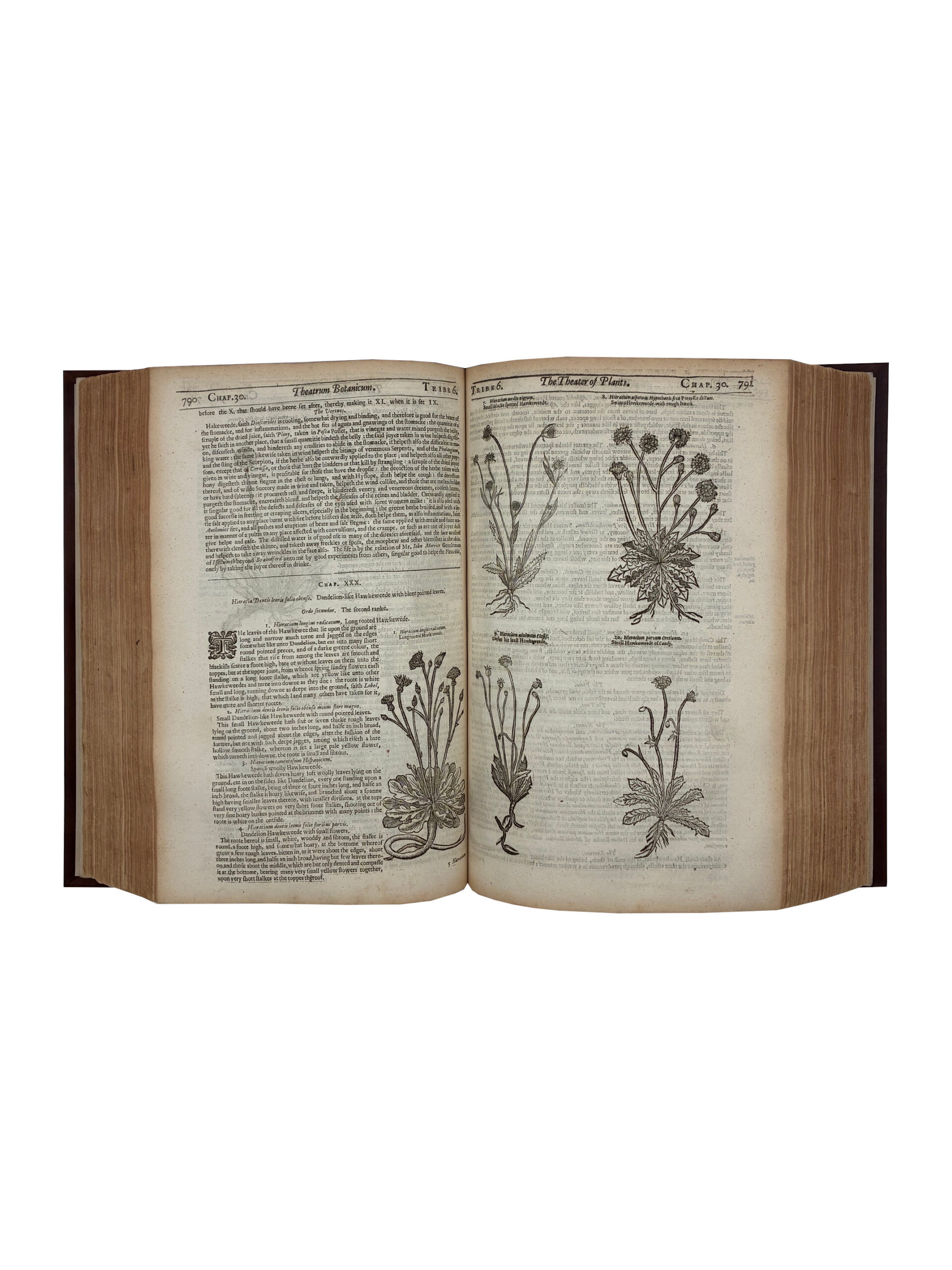
Description
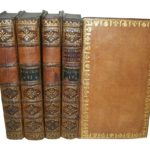
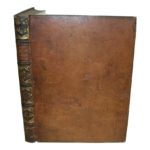
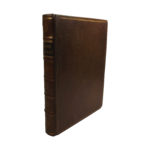
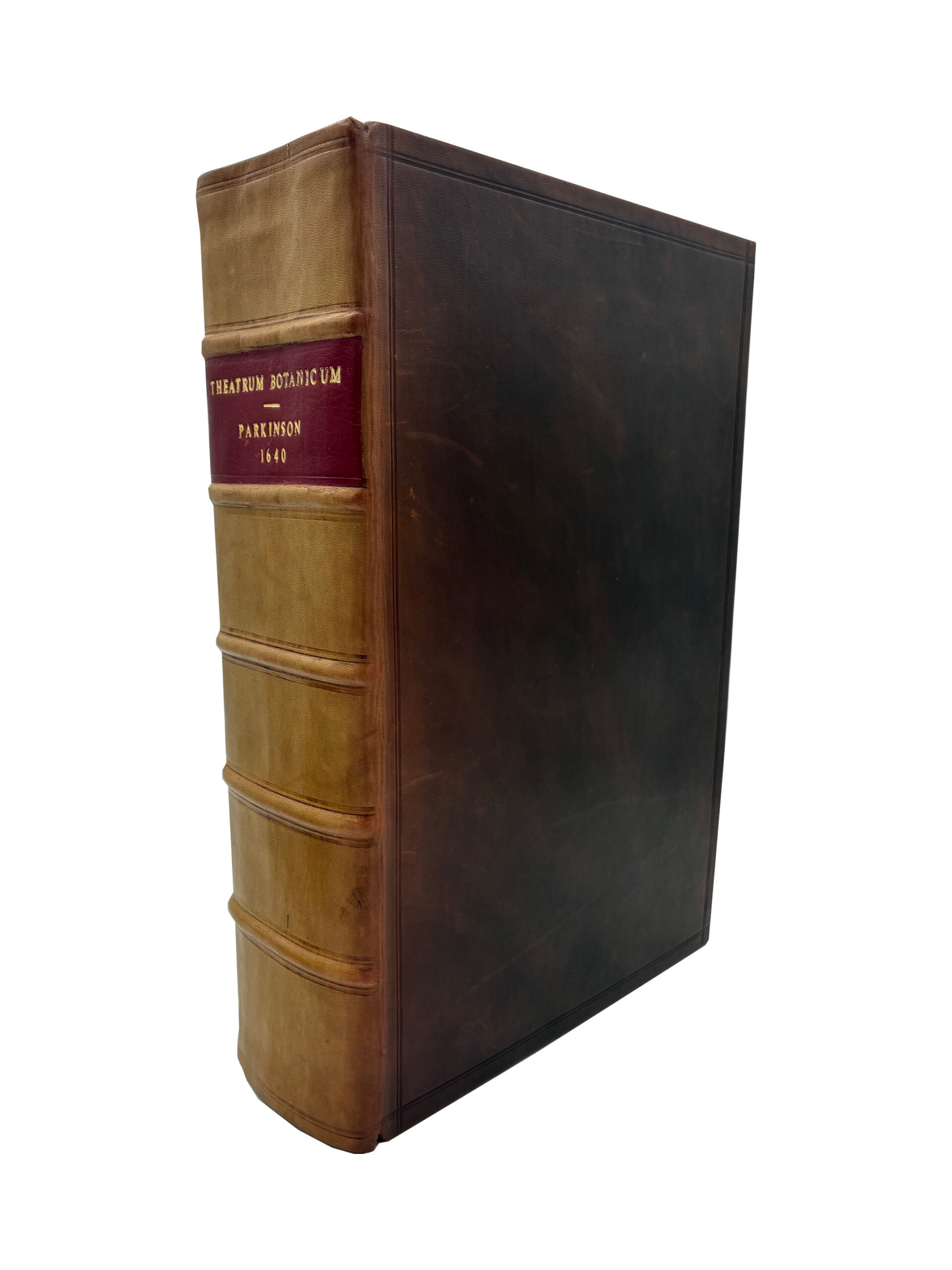
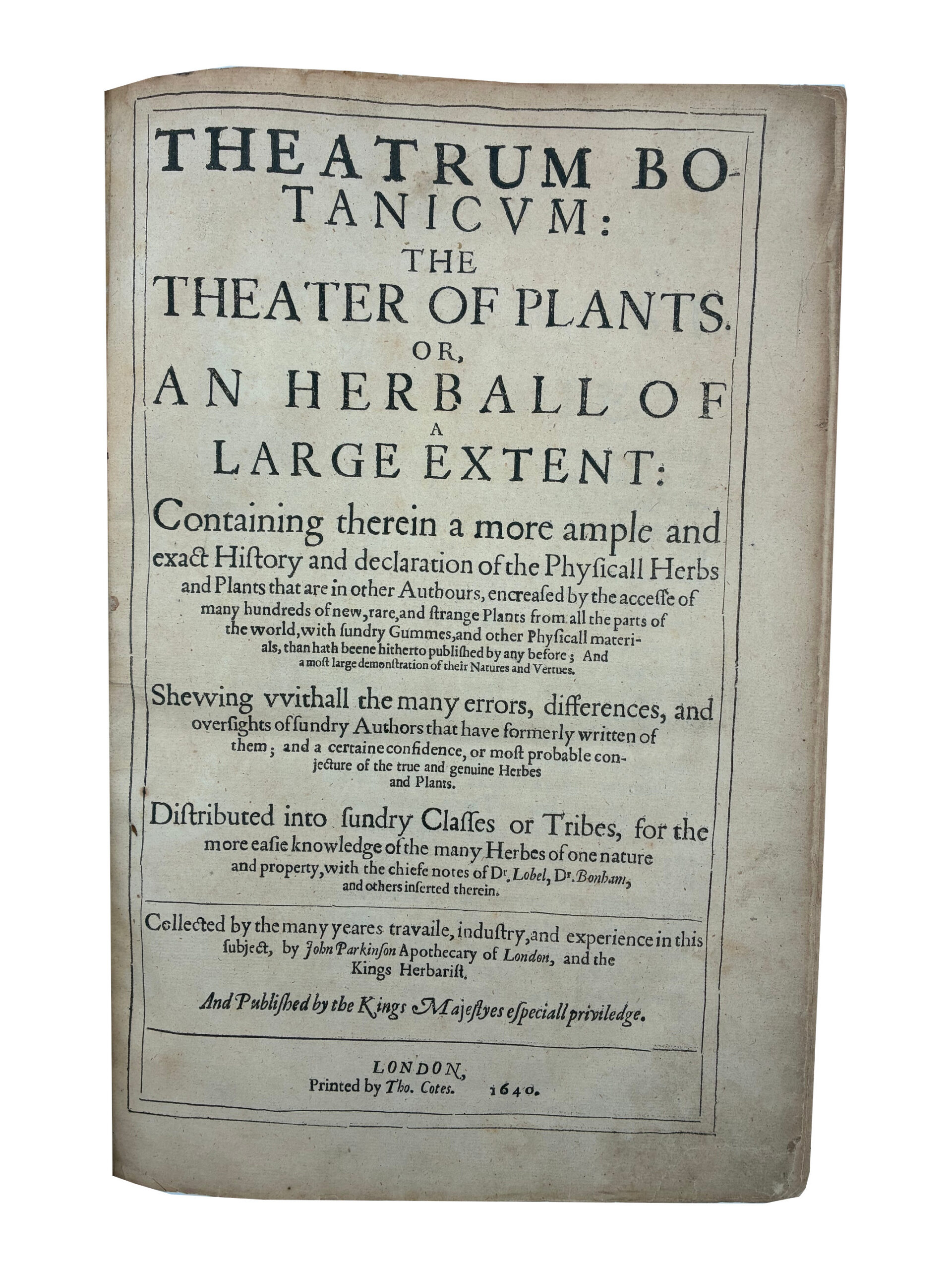
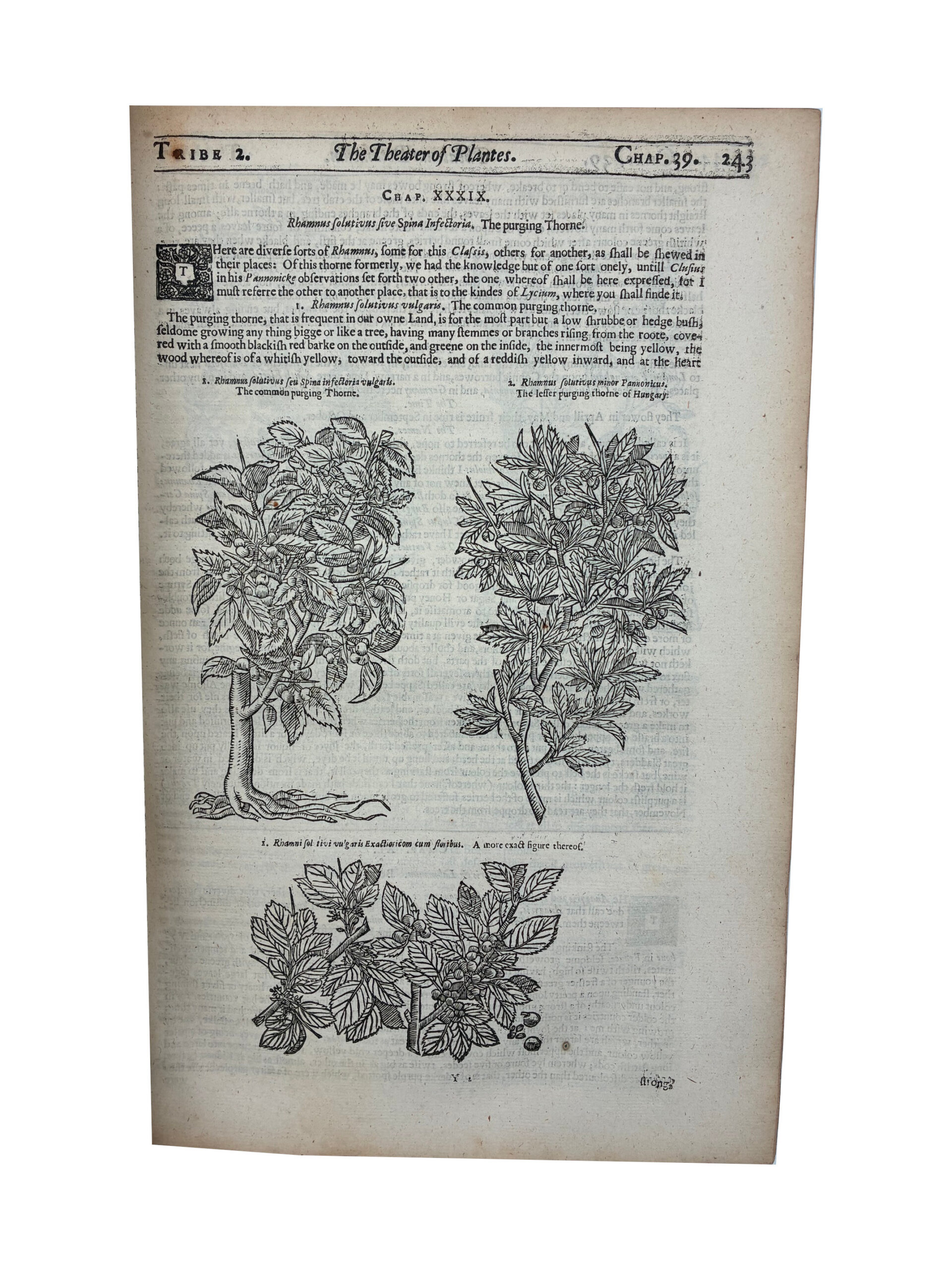
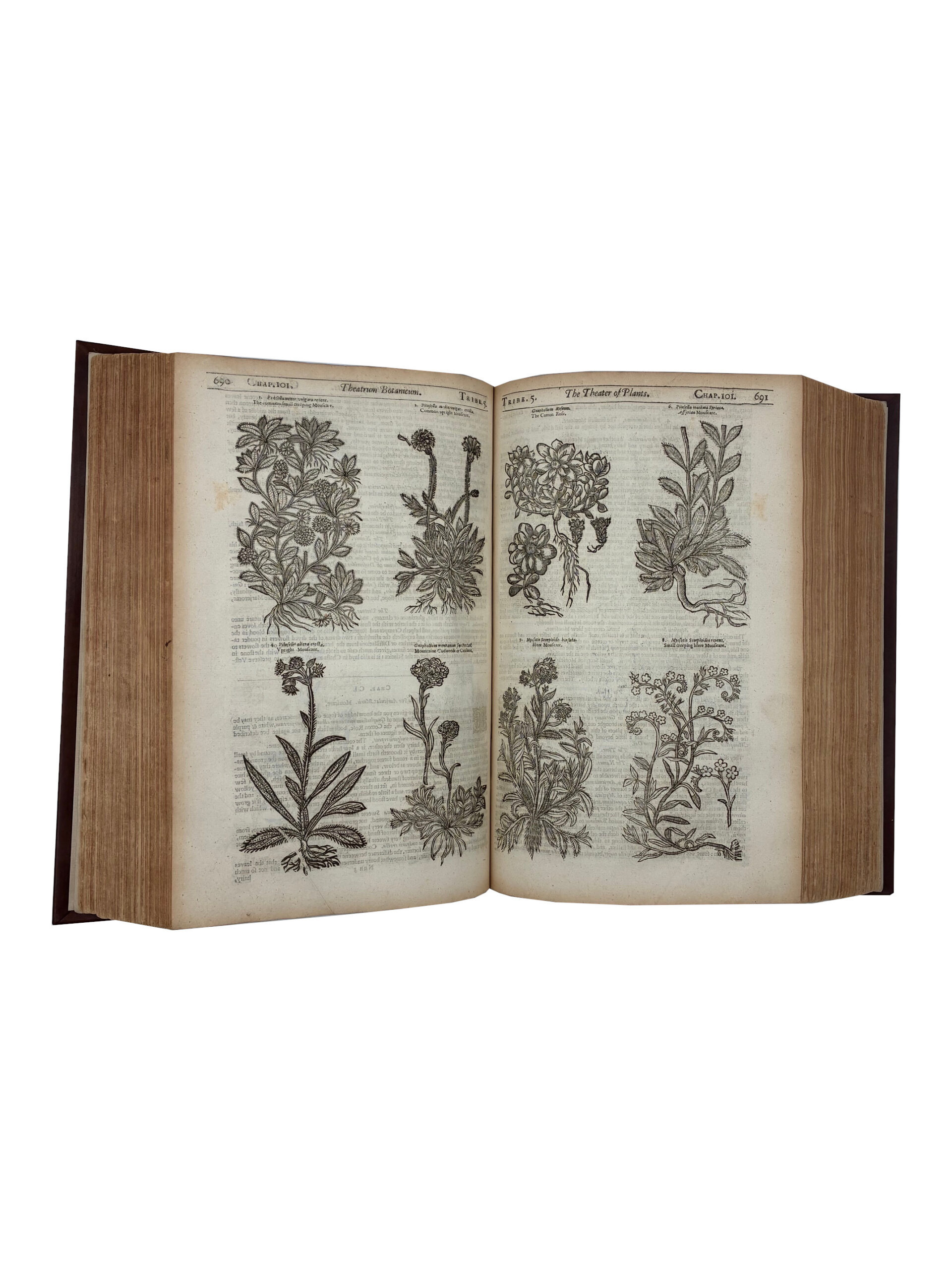
[005233] Parkinson, John. Theatrum Botanicum: The Theater of Plants or an Herball of a Large Extent: Containing Therein a More Ample and Exact History and Declaration of the Physicall Herbs and Plants That are in Other Authours Etc Etc. ill. Marshall, W.[illiam]. London: Tho. Coates, 1640. First Edition. Folio. Hardback. Good. [20], 1-141, 144-1652, 1663-1755pp, [3]; [ie. pi6, (a)4, B-4L6, 4M4, 4N-7I6]. Modern full calf, raised bands, spine in six panels, title label to second panel
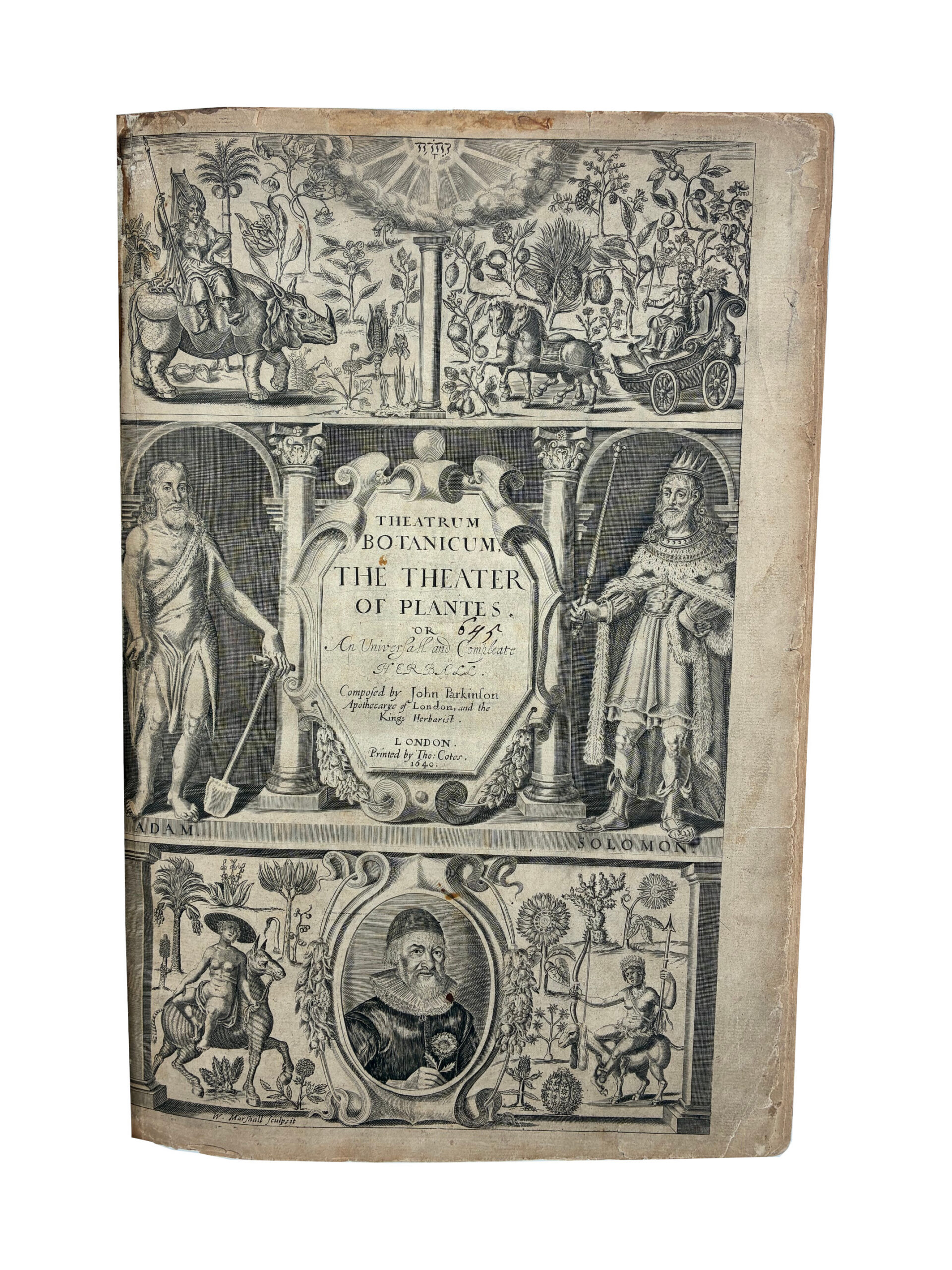
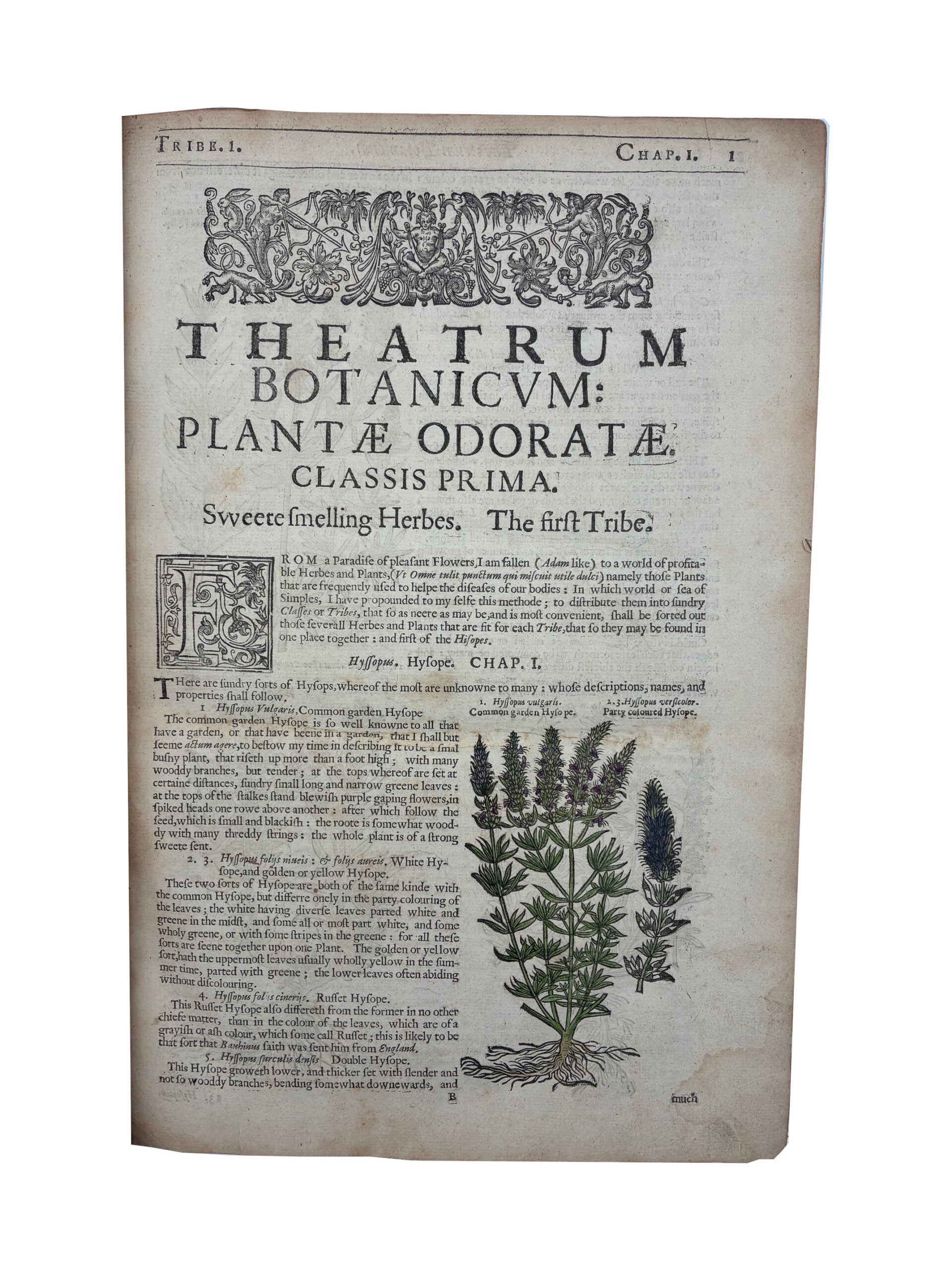
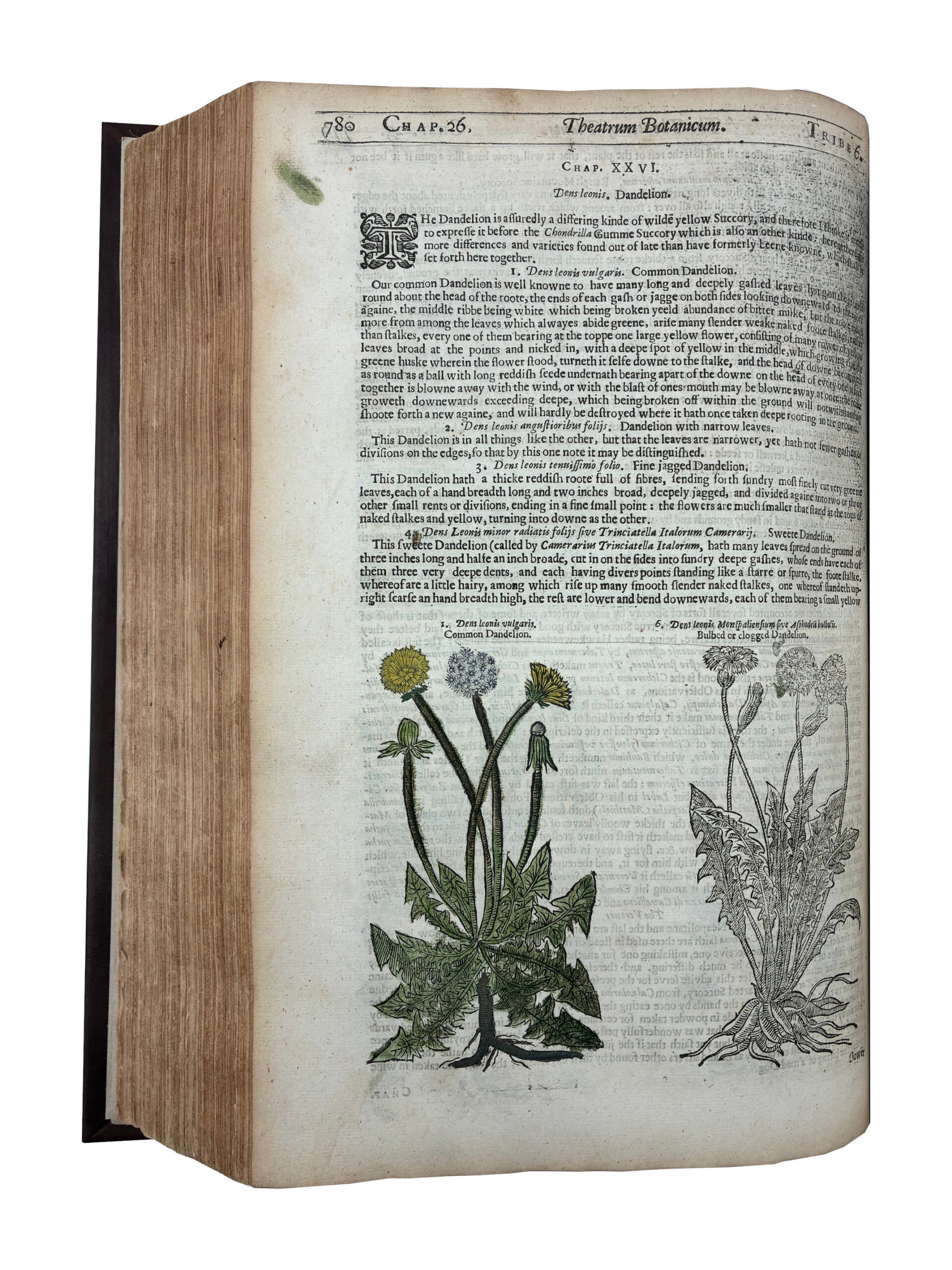
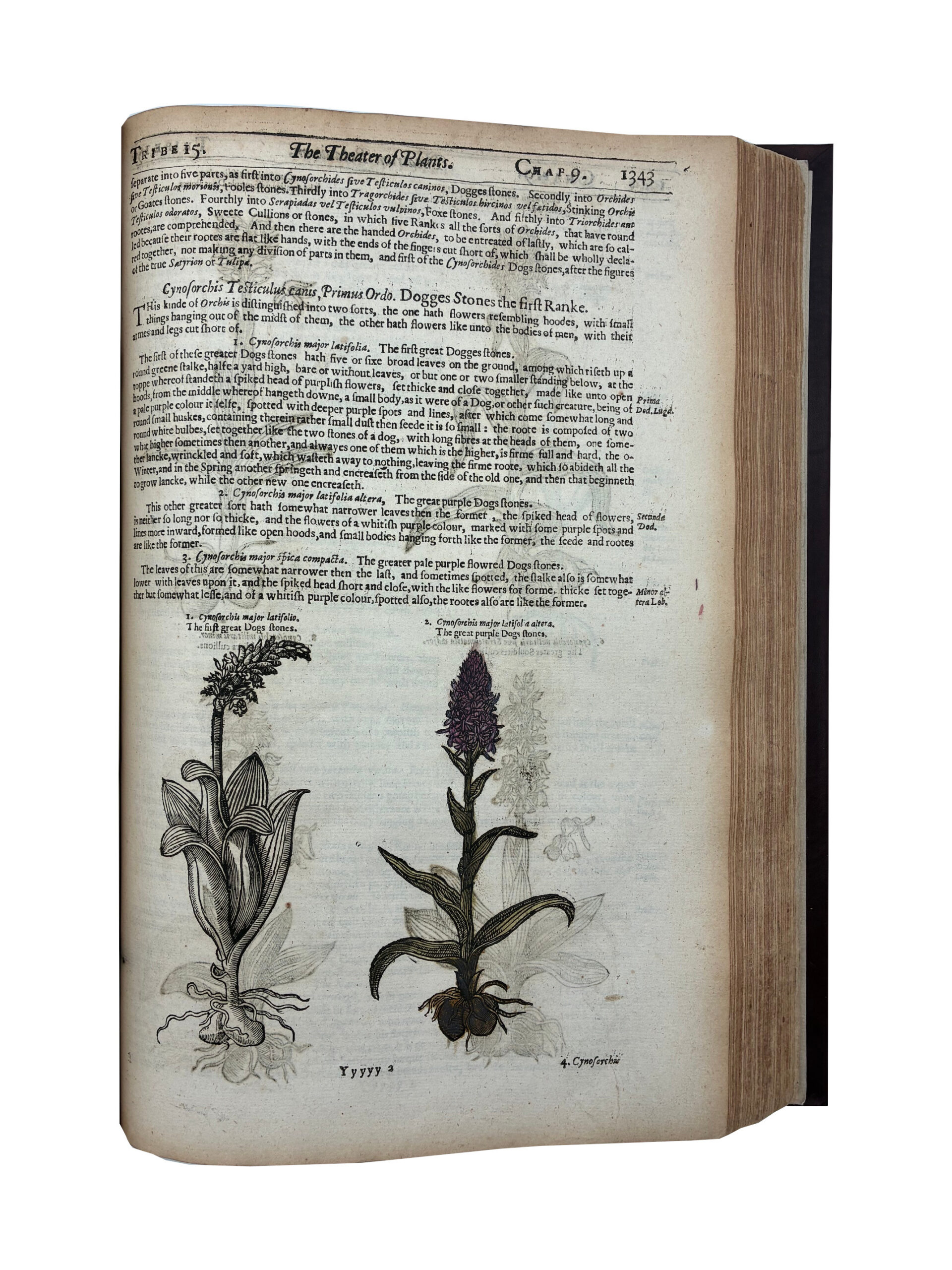
Spine faded, running around to head of lower cover, very minor rubbing to edges. Additional engraved title is browned, chipped to edges with a small tear to fore edge, ink number to centre just beneath title. The letter press title with old repair to foot on the reverse, light browning to edges of pages, occasional loss to corners though never affecting text, occasional small ink spots to text, with small tissue repairs to gutter at 4O1-3, another tissue repair to 4Q5, and a small hole to 5F4 (not affecting text). Several of the woodcuts have been neatly hand coloured at some point, but generally fairly clean
The engraved title is by W.[illiam] Marshall, with Adam and Solomon either side of the title, (representing Toil and Wisdom respectively), and at the four corners are female representations of continents, Asia on a rhinoceros, Europe in a chariot, Africa riding a zebra and America riding a long-eared sheep, and it also includes a portrait of the author wearing a cap and holding a flower to the foot of the design
Smith in Henrey notes that “This work and the herbal of Gerarde were the two main pillars of botany in England till the time of Ray, who indeed gave them fresh importance by his continual reference to their contents” (Henrey, page 79). “Parkinson, John (1566/7-1650), apothecary and herbalist … Parkinson became so well respected in his profession that he was one of the five apothecaries who were consulted by the College of Physicians during the compilation of the first Pharmacopoeia Londinensis … Parkinson’s second work, which occupied him for many years, was Theatrum Botanicum (1640), with more than 1700 pages. This described some 3800 plants and showed his extensive reading of the period’s authorities; of particular value was the almost entire incorporation of Caspar Bauhin’s Pinax, for its synonyms. Parkinson divided plants into seventeen ‘tribes’, based partly on their medicinal qualities and partly on habitat. William How in 1655 roundly accused him of plagiarising the work of Matthias L’Obel, but Parkinson had acknowledged his debt to him, and as one historian wrote, ‘He has taken very little, for the simple reason that very little was worth taking’ (Raven, 268). Certainly John Ray did not despise the work, for he termed it ‘the most full and comprehensive book of that subject extant’ (Raven, 272), and frequently quoted from it” (ODNB). With c.2714 woodcuts to the text, the largest of the English herbals and includes the names of twenty-eight species not previously recorded in Britain
Arents 212; Henrey 286; Pritzel 6934; Nissen BBI 1490; Wellcome I:4833